Module 7 of 17

Module 1: Understanding Money

7.1Purpose of the module

Module 1 gives learners the language and criteria needed to examine money. It should not become a long argument against every fiat system. Its job is to help learners explain why money exists, how different arrangements work, what trade-offs they create, and which problems Bitcoin later attempts to address.

Guiding question:

How can money break?

Learner promise:

I can explain and apply the money problems Bitcoin responds to.

If this is your first time teaching Module 1: Start with the opening questions and a familiar local payment. Do not begin with a long history lecture. Let learners describe what they already know, then introduce only the terms needed for the next activity. Return to the local fiat and banking notes when the cohort reaches those sections.

7.2Assessed competencies and competency criteria

Record each assessed competency. Decimal C IDs are competency criteria and rubric look-fors, not separate pass/fail rows.

Assessed competencyLearner must be able toCompetency criteria to coverUseful educator evidence
C1Explain why people use money, compare two forms, and explain one modern-money trade-off.C1.1 Money's purpose, barter limits, functions, and properties. C1.2 Comparison using relevant characteristics. C1.3 Local, observed, or realistic trade-off, such as inflation, banking, or CBDC, without personal disclosure.Own-words explanation, comparison, and scenario response.

Use guided discussions to develop and notice the formative competency F1 across the course. Do not infer it from attendance or confidence; notice clear explanation, relevant evidence, respectful listening, and basic reasoning. F1 is not a certification gate.

7.3Prepare before class

  • Read the Module 1 Student Guide sections and identify which definitions need local-language support.
  • Prepare the five opening questions for cohort discussion.
  • Select one money-properties activity and one modern-money activity; browse the Activity Library for options to adapt.
  • Prepare locally familiar examples of a medium of exchange, unit of account, and store of value.
  • Use local examples only to illustrate the shared, neutral concepts; verify changing local facts, avoid recommendations, and preserve the same competency and evidence standard.
  • Review the currencies and payment methods learners encounter locally.
  • Be ready to facilitate the local fiat-system scenario. Identify the relevant central bank, commercial banks, payment providers, government roles, and settlement arrangements.
  • Verify current local banking rules relevant to the discussion, including reserve or liquidity arrangements, capital supervision, deposit protection, withdrawal rules, account-access rules, and consumer protection. Explain only what you have verified and do not provide legal or financial advice.
  • Locate the official inflation measure, current publication date, basket description, and methodology. Prepare one local item with a dated price comparison.
  • Check whether a local CBDC exists, is proposed, or is only hypothetical. Do not teach a generic CBDC feature as a confirmed local fact.
  • Prepare an offline role map, balance-sheet sketch, price-basket example, and activity fallback.

7.4Suggested two-hour flow

This is a minimum pathway. Extend it when the cohort needs more economic background or local discussion.

TimeLearning moveSuggested method
0–12 minSurface prior ideasOpening questions in pairs, then cohort discussion
12–28 minWhy money existsExchange scenario and spot question
28–45 minFunctions and propertiesLocal examples plus money-properties comparison
45–58 minBarter and choiceShort double-coincidence role scenario; scarcity and opportunity-cost debrief
58–70 minMonetary historyNon-linear timeline with local additions
70–92 minFiat-system rolesLocal payment trace and institution map
92–105 minBankingBalance-sheet sketch or liquidity/solvency scenario
105–115 minInflation, purchasing power, and CBDCDated local evidence discussion
115–120 minReview and bridge“Money can break when…” explanation

If the course has more time, split the module into two parts: money foundations, then modern-money trade-offs.

7.5Opening questions about money

Prepare: Give each learner access to the Student Guide questions. Prepare a board, paper, or shared display for anonymous questions and contradictions that emerge. Make clear that this is an opening discussion, not an assessed task, and that learners should not disclose income, debt, savings, banking status, or holdings. Arrange translation or reading support before the session where needed.

Invite learners to discuss the five questions in the Student Guide before you explain the course position. Use their ideas to guide the discussion.

Facilitate in this order:

  1. Give quiet thinking time.
  2. Let learners choose one question to discuss in pairs.
  3. Ask the group which statements are factual and which are judgments.
  4. Record questions and contradictions without resolving all of them.

Listen for hidden definitions. If a learner says money is “anything valuable,” ask whether every valuable object is normally accepted, used for pricing, or carried into the future.

Do not ask learners to disclose income, debt, savings, banking status, or holdings.

7.6Why money exists

Keep the explanation grounded in coordination:

  • people specialize
  • direct exchange requires matching wants
  • commonly accepted money separates selling from buying
  • a shared unit helps people compare and record value; and
  • money can move purchasing power across time.

Ask:

Why did money come into existence? Which exchange or coordination problem does it help solve?

A strong beginner answer does not need a universal theory of monetary origins. It should explain why a commonly accepted medium makes exchange easier.

Avoid saying all money began through one historical process. The course presents a useful pattern, not one identical global sequence.

7.7Functions and properties of money

Teach the difference explicitly:

Functions
Medium of exchange, unit of account, store of value.
Properties
Durable, portable, divisible, fungible, scarce, acceptable, verifiable.

Use different purposes. Ask which properties matter for:

  • buying food today
  • saving for one year
  • paying someone far away
  • keeping an emergency reserve; and
  • recording business prices.

Then ask whether the same form of money performs equally well for every purpose and in every place.

Activity: money-properties comparison

Purpose: Prepare the criteria learners will reuse for Bitcoin in Module 2.

Setup: Select three or four familiar forms, such as local cash, a bank balance, a useful commodity, a precious metal, or another locally relevant asset. Do not pre-label a winner.

Task: Teams compare each form against the seven properties. Every judgment must include a reason, condition, or example.

Debrief: Ask which property changed most when the purpose changed. Preserve the comparison for Module 2.

Watch for: Treating a property as absolute. Cash may be portable across a neighborhood but difficult to transfer internationally. A bank balance may be accepted through local payment rails but dependent on account access.

7.8Barter and the double coincidence of wants

Use three people with mismatched goods and wants. First, let the group attempt direct exchange.

Amina

Has: rice
Wants: shoes

With Luis

Luis does not want rice.

Luis

Has: shoes
Wants: oil

With Mei

Mei does not want shoes.

Mei

Has: oil
Wants: repairs

With Amina

Amina cannot do repairs.

Then introduce a commonly accepted medium.

1First, she sells

Amina sells her rice to one person for money

2Later, she buys

She uses that money to buy shoes from someone else

Ask:

  • What made the first exchange difficult?
  • Did barter fail because the goods had no value?
  • What changed when selling and buying became separate actions?
  • Which problems remain even after money is introduced?

Clarify that barter can work in particular settings. The point is that it becomes difficult to coordinate at scale.

If using a game, debrief its simplifications. Real exchange includes relationships, credit, gifts, obligations, bargaining, law, and repeated interaction.

7.9Scarcity, value, and exchange

Use one limited local resource to distinguish four ideas:

  • Scarcity: not every desired use can be satisfied.
  • Opportunity cost: choosing one option gives up the best available alternative.
  • Time preference: circumstances affect how strongly a person prefers value now rather than later.
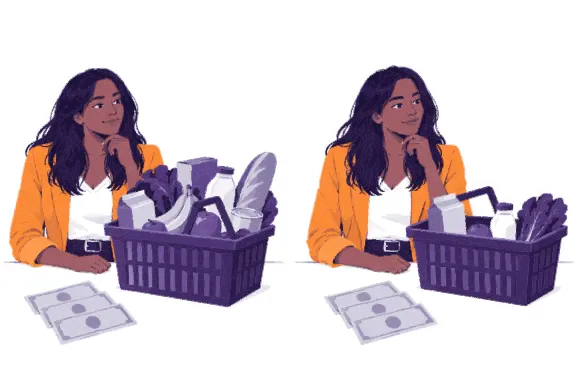
  • Trade-off: a choice gains one benefit while accepting a cost or giving up another.
A shopper with limited money weighs the options

Food

Eat well today.

Transport

Get to work.

Save

Keep it for later.
Each choice gives up the others: the opportunity cost

Ask learners to explain why rarity alone does not create value. A rare item with no use or demand may remain unwanted.

Avoid moral judgments about time preference. A person meeting an urgent need is not failing a lesson about saving.

7.10Beginner monetary history

Build a layered or braided timeline rather than a single arrow of progress. Include:

Direct exchange
barter, gifts, debts
Commodity money
salt, shells, silver, gold
Standard coins
Representative paper
claims on metal
Bank and government money
Digital money

Invite local additions. Ask which forms coexisted rather than assuming one replaced another completely.

If using the gold standard, Bretton Woods, the Nixon Shock, or Executive Order 6102:

  • keep the explanation brief and relevant to the module
  • state the location and historical scope
  • present Executive Order 6102 as a specific United States example
  • present 1971 as an important marker in international dollar-to-gold convertibility, not the origin of all fiat money; and
  • route detailed monetary history to Advanced Learning.

Resources

7.11Fiat money and the local system

Begin with the stable definition: fiat money is issued under government authority and is not redeemable for a fixed quantity of a commodity such as gold.

Then trace one ordinary local payment. Use a realistic invented case such as transport, food, wages, phone credit, or a bill.

Ask learners to identify:

  1. the unit of account.
  2. why the recipient accepts it.
  3. the records or payment instruction used.
  4. the bank, payment provider, or cash infrastructure involved.
  5. the rules or institution supporting settlement; and
  6. what would make the payment harder if acceptance or trust broke down.
Central bank

Manages monetary policy and supports payment settlement.

Commercial bank

Owes customers their deposits; a deposit is the bank's liability.

Payment services

Carry payment instructions that change bank deposits.

Government

Collects taxes and spends, under its own laws.

Citizens and businesses

Hold deposits, pay, get paid and pay taxes.

Varies by country

Exact institutions and rules differ from place to place.

Be ready to explain the local system. Name which details are general and which are specific to the jurisdiction. Invite multiple experiences, including cash-based and underbanked realities, without turning the discussion into a political conclusion.

Avoid these shortcuts:

  • “Fiat has value only because government forces it.” Legal tender and taxes matter, but acceptance, production, habits, networks, credit, and institutions also matter.
  • “Digital money is a new currency.” A phone or card is often an interface to an existing fiat claim.
  • “Every fiat system works the same way.” Institutions and laws vary.
  • “Fiat always fails immediately.” The relevant lesson is changing rules, dependence, and trade-offs, not an inevitable date prediction.

Resources

7.12Fractional-reserve banking, liquidity, and solvency

Draw a simplified balance sheet:

  • the customer deposit is a liability the bank owes
  • a bank loan is an asset to the bank and a liability to the borrower
  • approving a loan commonly creates a matching deposit
  • banks must manage liquidity, capital, funding, credit risk, regulation, and settlement; and
  • exact rules vary by jurisdiction.
  1. 1Apply for the loanThe borrower asks the bank for a loan.
  2. 2Approve the loanThe bank agrees to lend.
  3. 3Create the depositThe bank credits a new deposit to the borrower's account.
  4. 4Spend or transferThe borrower uses the deposit to pay others.
  5. 5Repay with interestThe borrower repays the bank the principal plus interest.

Do not use a repeated-physical-deposit “money multiplier” story as if it describes every modern banking system mechanically.

Distinguish:

Liquidity risk

Many depositors queue to withdraw today
The bank's loans may still be repaid later
Not enough cash or quickly usable assets now

The problem

Timing: cash is short today

Solvency risk

Borrowers stop paying their home loans
Failed loans lose their value for the bank
Total assets are worth less than what the bank owes

The problem

Value: time to sell does not help

Ask:

Can an institution be solvent but temporarily illiquid? Can it have cash today but still be insolvent? What is different?

Local banking discussion

Prepare to explain relevant local rules and institutions, such as:

  • who supervises commercial banks
  • whether a reserve requirement exists and what it means
  • liquidity and capital requirements at a beginner level
  • deposit-insurance eligibility and limits
  • withdrawal or transfer limits
  • the central bank's lender-of-last-resort role
  • account-access and identity rules; and
  • consumer complaint or resolution pathways.

Use current authoritative sources. State the date checked. If you are unsure, say what must be verified rather than improvising a legal or regulatory answer.

Do not imply that every bank is fraudulent, every bank is about to fail, or regulation removes all risk.

Resources

7.13Inflation and purchasing power

Teach price inflation as a sustained rise in the general price level. One product becoming more expensive is not, by itself, proof of general inflation.

Before

You hold 100 units.
The basket costs 100.
You can buy the full basket.

Price level

Lower

Purchasing power

Higher

After prices rise

You still hold 100 units.
The same basket costs 110.
You can no longer buy it all.

Price level

Higher

Purchasing power

Lower

Ask learners to identify possible causes of a price change:

  • money and credit conditions
  • supply disruption
  • changes in demand
  • currency weakness
  • taxes or regulation
  • changes in wages, transport, energy, or production costs; and
  • local shortage or quality change.

Avoid assigning every price change to one factor.

Activity: purchasing-power investigation

Before class: Choose one familiar item and find reliable records of its current and historical price if possible. Locate the official inflation measure and its basket or methodology. You can use the Bitcoin Diploma AI assistant to develop questions about the methodology, then check the explanations and figures against the original statistical publication.

Learner task: Compare the item's price across time, ask whether income changed similarly, and name other possible causes. Then compare the item with the official measure.

Discussion:

  • Which goods and services are included in the official basket?
  • How are weights chosen?
  • Has the basket or method changed, and is the reason documented?
  • Why can a learner's experience differ from the average?
  • What evidence would be needed before alleging error or manipulation?

Prepare for this discussion. Review the local official measure well enough to explain what it does and does not claim. A basket change is not automatically manipulation, but it can affect comparison and should be transparent.

7.14Why the US dollar is a reserve currency

Keep this section proportionate. Explain reserve currency, the historical role of the pound, the postwar position of the United States, Bretton Woods, the 1971 end of official international dollar-gold convertibility, and continuing network and market effects.

Be ready to facilitate discussion, not only present the timeline. Prepare learners to ask why reserve-currency use can persist, what institutions and network effects support it, what has changed over time, and which claims require current evidence.

Treat claims about the dollar's current reserve share as time-sensitive. Verify and date them before use. Do not turn the topic into a prediction of imminent collapse or permanent dominance.

Ask learners whether a currency can remain widely used after one part of its original arrangement changes. This helps prepare the concept of network effects.

7.15Why people look for alternatives

Compare cash with locally relevant alternatives through the same criteria. Include benefits and risks for precious metals, real estate, stocks, education, land, tools, foreign currency, or another appropriate example.

Do not recommend an asset. Do not imply that any option guarantees purchasing power. Ask:

  • Which money function is the person trying to improve?
  • What opportunity cost appears?
  • What new storage, access, liquidity, knowledge, legal, or price risk appears?

This section prepares learners to evaluate Bitcoin by the same standard rather than treating it as exempt from trade-offs.

7.16CBDCs as digital fiat

Use five questions:

  1. Who issues it?
  2. Who can change its supply rules?
  3. Who controls access or permissions?
  4. What transaction or identity information is visible to whom?
  5. Can users independently verify the system's rules and balances?

Explain that a CBDC is a central-bank liability in digital form. “Digital” does not automatically mean decentralized, scarce, private, permissionless, or openly verifiable.

Question
Cash
Bank deposit
Retail CBDC
Bitcoin
Who issues it
Central bank
Commercial bank
Central bank
No issuer
Form
Notes and coins
Digital balance
Digital
Digital
Who can use it
Whoever holds it
Accepted customers
Depends on the design
Anyone
Who sees payments
Payer and payee
The bank
Depends on the design
Everyone, without names
Supply rules
Central bank
Banks and central bank
Central bank
21 million limit
Verify it yourself
Check the note
Trust the bank
Depends on the design
Run a node

CBDC designs differ. Do not claim that every CBDC has or lacks a feature. Separate confirmed local design, published proposal, commentary, and speculation.

7.17Strong Module 1 questions

  • Why did money come into existence?
  • Can something perform one money function well and another poorly?
  • Which monetary property matters most for this particular purpose?
  • Does scarcity alone create value?
  • Which people, records, and rules make an ordinary local payment work?
  • What does a bank owe a depositor?
  • How are liquidity and solvency different?
  • Why might personal purchasing-power experience differ from an official measure?
  • Which evidence would support a claim about local inflation?
  • How is a CBDC similar to and different from bank deposits, cash, and Bitcoin?
  • Why might someone seek an alternative to cash, and which new risk appears?

7.18Common misconceptions and responses

MisconceptionBeginner-safe correctionFollow-up question
Money and wealth are the same.Money helps measure and exchange claims on useful goods, services, time, and resources; it is not identical to all wealth.Can a useful home be wealth without being convenient money?
A store of value never loses value.Store of value is a function, not a guarantee. Every option has a time period and risk.What could weaken this function for cash, gold, or another asset?
Barter never works.Barter can work, but matching wants, quantities, timing, storage, and pricing becomes difficult at scale.What makes barter easier in a repeated local relationship?
Rare means valuable.Value also depends on usefulness, demand, information, and circumstances.Name something rare that people may not want.
Fiat is simply fake money.Fiat is a real monetary arrangement supported by government authority, institutions, law, acceptance, and network effects. Its rules and trade-offs can be evaluated.Which local payment would fail if the fiat records or institutions failed?
Banks lend only existing customer cash.Modern bank lending commonly creates a matching deposit, within capital, liquidity, regulatory, funding, risk, and demand constraints.What appears on the bank's assets and liabilities after a loan?
Fractional reserve means the bank keeps the same fixed fraction everywhere.Reserve, liquidity, and capital arrangements differ across countries and can change.Which local rule needs checking?
Every higher price is inflation caused by money printing.General inflation is an average and price changes can have several interacting causes.What other cause could change this item's price?
The official basket should match every person's experience.The measure is an average; household spending patterns differ.Which category matters more in your invented household?
Every CBDC has identical surveillance or control.Features depend on design, law, infrastructure, and implementation.Which feature is confirmed by a primary source?

7.19Module 1 educator-led theoretical touchpoint

Use an approved short task that requires connection rather than definition alone. This provides educator-led theoretical evidence. A strong candidate combines:

  • an own-words explanation of why money exists
  • comparison of two forms of money through at least two relevant properties
  • one local or realistic fiat-system, banking, inflation, or CBDC scenario; and
  • one benefit, risk, or trade-off.

Listen for:

  • accurate use of functions and properties
  • a realistic coordination or exchange explanation
  • awareness that monetary history and banking rules vary
  • no one-cause inflation claim
  • a clear connection between the example and the concept; and
  • uncertainty stated where evidence is incomplete.

Do not treat the learner's preference for fiat money or Bitcoin as evidence of learning. Apply the approved theoretical-touchpoint rubric, record individually identifiable evidence, give feedback, and offer reassessment where needed. If the task has not been approved for assessment, use it only formatively.

7.20Review and bridge to Module 2

Ask each learner to complete:

Money can break or become less useful when ________, because ________. One example is ________. The relevant trade-off is ________.

Summarize that people may seek different monetary arrangements when they want different trade-offs around supply, access, control, settlement, privacy, and trust.

Then use the Module 1 Student Guide closing question. Keep the response private or optional, following the light module-closing reflection guidance above.

Bridge:

The next module asks whether decentralized digital money can offer a different arrangement without recreating the double-spend problem.

↑ Back to table of contents