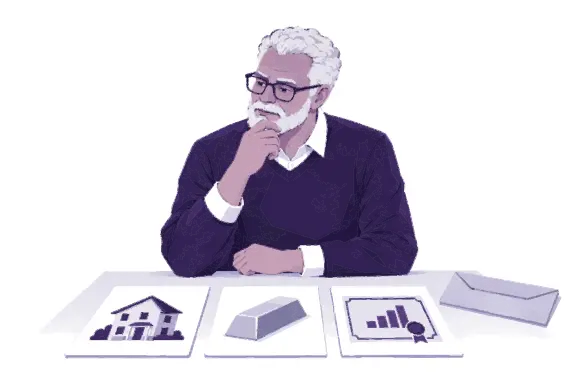
Plenty people no dey ever stop to think about money.
No be how to earn am or spend am, but to really think about wetin e be and how e dey work.
We dey use money every day, but we no dey often ask how e dey work.
Before you continue to read, take small time think about these five questions. Write short answer for each one if you fit:
Why people need money?
Wetin dey make something become money?
Who fit create or control the money wey you dey use?
Why the money wey you dey use get value?
Your money fit buy the same quantity of things today as e fit buy before?
Keep your answers. Come back to them when you reach the end. This guide fit make some of your views stronger and change others.
As you dey read, take note of the difference between fact and opinion. "Dem dey accept this money note to pay tax" na fact wey person fit check. "This na the best kind of money" na conclusion wey need clear standards and evidence.
This guide focus on six questions: why money matter, wetin e be, wetin fit go wrong with am, wetin Bitcoin be, how to use am safely, and wetin go come next.
Na only for learning. E no dey give advice about money matters, investment, law, or tax, and e no dey tell you to buy, sell, or keep anything.
Wetin Be Money?
Money na tool for exchange.
Nobody want money just to get money. We want am because of wetin e fit buy. Paper money na just piece of paper. Wetin make am useful na say other people go accept am in exchange for things wey we really want, because dem expect say other people go accept am later.
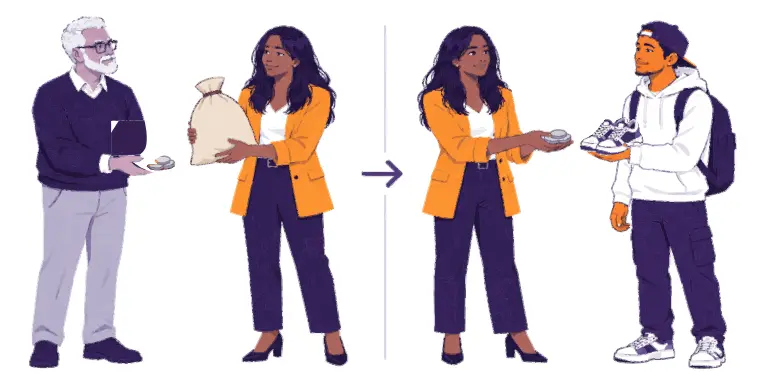
Na this one make money different from trade by barter.
For trade by barter, trading dey work only when both people want wetin the other person get, for the same time and for quantity wey suit both of dem. Economists dey call this one when wetin two people want match wetin each of dem get. If una dey grow rice and una need shoes, the shoemaker fit want cooking oil, no be rice. Money dey solve this problem by separating selling from buying: una go sell una rice to one person and buy shoes from another person.
Money normally dey do three things.
E na wetin people dey use for exchange: people dey accept am as payment. E na unit wey people dey use measure value: dem dey state prices with am, so we fit compare the value of different things. And e na wetin people dey use store value: e dey carry value from today enter future. No money dey store value perfectly, but the buying power of some kinds of money dey reduce more slowly than others.
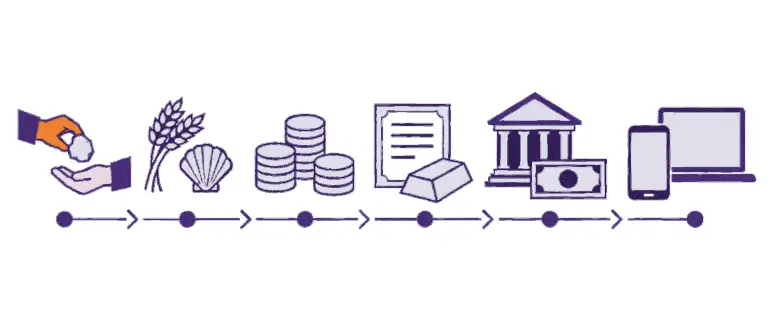
Throughout history, plenty things don serve as money: shells, salt, beads, farm animals, copper, silver, and gold. People begin use precious metals for plenty places because dem scarce, dem dey last, and plenty people dey accept dem. But to carry and protect metal hard, so banks begin issue papers wey give the holder right to collect one stated quantity of metal. Under different versions of sistem wey tie money value to gold, law tie one unit of currency to one quantity of gold. The rules differ from place to place and from one period to another.
As time dey go, money begin depend more on institutions and promises than on metal. For 1971, the United States stop the official exchange wey allow foreign governments and central banks change dollars for gold. Today, most countries their currencies na money wey government declare as money: currency wey dem issue under government authority, normally through central bank, wey person no fit exchange for one fixed quantity of gold or any other commodity. The word fiat na Latin for "make dem do am", wey people often understand as "by decree".
Money wey government declare as money dey work because people, businesses, banks, and governments dey accept am. Laws normally dey make am money wey dem legally recognise for payment and require people to use am pay tax, and people want am because everybody around dem dey use am.
We move from money wey something dey back, to money wey trust for somebody dey back.
Wetin Dey Wrong With Our Money?
When people hear the word inflation, na price wey dey go up dem usually dey think of.
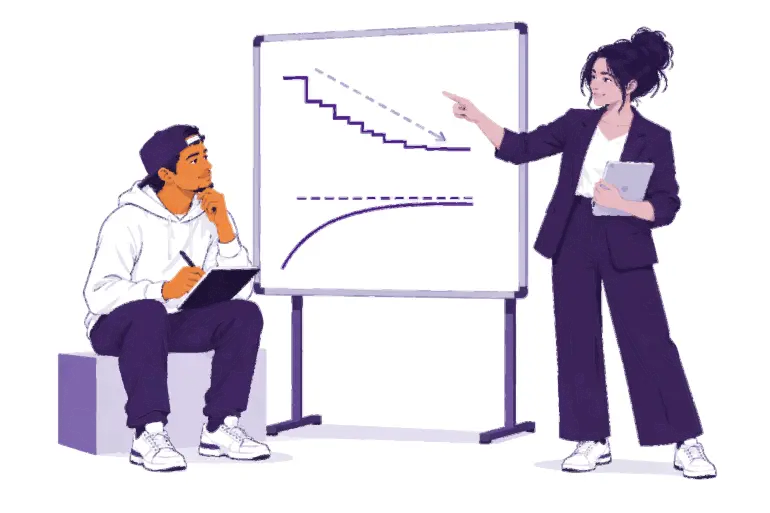
Inflation for price na when the general level of prices dey rise steadily. The other side na power to buy things: how much one unit of money fit buy. If the price of one basket of basic goods rise from 100 unit of money to 110, that same 100 unit no go fit buy the full basket again.
Plenty things dey cause inflation, and economists dey debate how much each one dey contribute: increase for money and credit, wahala wey disrupt supply, changes for demand, currency wey dey lose value, taxes, and cost to produce things. One cause need special attention because na choice, no be accident: for fiat system, small number of institutions fit increase the supply of money and credit and change the rules wey guide am.
Think about wetin dey make something get value.
The original Mona Lisa get more value pass any copy of am, no be because e fine pass, but because na only one original dey. Scarcity alone no dey give something value, but when people want something, how much of am dey available matter.
When the supply of money dey grow faster than the things wey e fit buy, each unit go tend to buy less.
Inflation no dey affect everybody the same way. Person wey keep most of im money as cash or savings fit lose power to buy things. Person wey get assets wey their price dey rise fit get some protection. Wages and prices no dey adjust at the same speed too.
The money for your bank account still different from cash wey dey your hand. Bank no dey keep every deposit as cash: e dey lend out and invest most of am. The balance for your bank account na the bank promise to pay you. The bank usually dey keep that promise, but e depend on the bank and the rules wey guide am.
Try am: check your power to buy things
Choose one everyday thing for your community, like bread, transport, or phone credit. Write down how much e cost today. Ask somebody how much e cost some years ago, then check record wey you fit trust if you fit. Income rise at the same rate? Wetin else fit explain the change?
All this no mean say fiat money no dey work. E dey make payment easy, allow credit to adjust as need change, and provide ways to respond when serious wahala happen. But that same ability to adjust dey bring risk: the supply and rules fit change, and the people wey dey use am no get much say.
Na why people dey look for other options, and na why dem create Bitcoin.
Wetin be Bitcoin?
Before Bitcoin, to send money online always depend on organization wey people trust: bank or payment company wey dey keep record of transactions, approve accounts, and fit delay, block, or reverse payment. For many decades, computer scientists try to create digital money wey no get one central body wey dey issue am. The hard part na say digital information easy to copy. If person fit copy digital coin and spend am two times, e no go fit work as money. Dem dey call this one problem of spending the same money two times.
On 31 October 2008, one person or group wey use the name Satoshi Nakamoto publish one paper wey explain solution: Bitcoin: Electronic Cash System from Person to Person. The network start for January 2009.
Bitcoin na digital money wey no dey under one central body's control, wey get supply wey get limit, and wey person fit send directly to another person without bank permission.
As e no dey under one central body's control mean say no central office dey wey fit create accounts, change how much dey inside accounts, or approve who fit join. Anybody fit download and check the software wey its source code open to everybody, and plenty independent computers dey keep copy of the record. This one no mean say everybody get equal power to influence things. E mean say no single participant fit change the transaction record or the money rules for everybody.
To get supply wey get limit mean say bitcoin no go ever pass 21 million. Dem dey release new bitcoin according to timetable wey everybody fit see, and independent computers wey dem dey call nodes dey reject any block wey break that rule. People fit trust the limit because anybody fit check am. But no be law of nature: e dey hold because participants continue to enforce am. And supply wey get limit no guarantee say price go rise. Price depend on how people want buy am and how much dey available.
As e dey work directly from person to person mean say una fit send bitcoin to anybody, anywhere, without opening account with the Bitcoin network or asking any central authority for approval. No company fit freeze bitcoin wey una control by unaself. The other side of that freedom na responsibility: normally, person no fit reverse valid transaction, and no help desk dey for the network.
One wrong idea na say Bitcoin no dey within reach because one bitcoin cost plenty. Una no need to buy or use one whole bitcoin. One bitcoin fit divide into 100,000,000 smaller units wey dem dey call satoshis, or sats. To get 100,000 sats and to get 0.001 bitcoin na the same amount.
The network depend on different participants: people wey dey use am wey dey send, receive, and hold bitcoin; nodes wey dey check every transaction and block to make sure say dem follow the rules; and miners wey dey compete to add new block to the record about every ten minutes. That record, wey be the blockchain, dey open for anybody to see, and to rewrite am dey cost plenty.
Small note about spelling: Bitcoin wey start with capital B normally mean the network or the system. bitcoin wey start with small b mean the money itself.
Bitcoin still get advantages and disadvantages wey person need to weigh. Its price fit change quick. Normally, mistake wey person make no fit reverse. Plenty places never dey accept am well, and to use am safely, person need to learn some things. Bitcoin replace some of the trust wey people put for institutions with checking to confirm things and taking personal responsibility. E no remove risk.
How You Go Take Use Bitcoin?
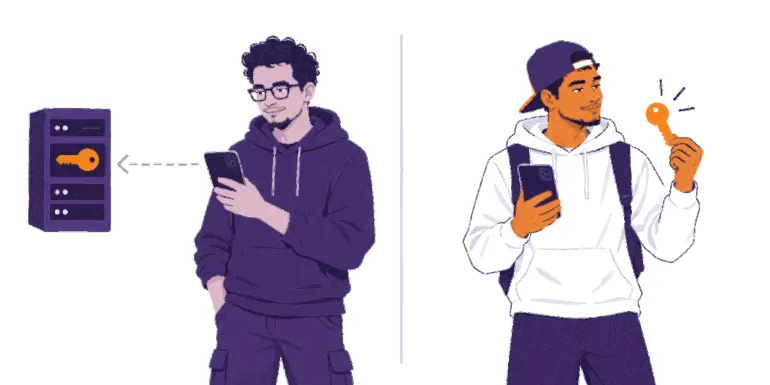
One Bitcoin wallet na tool, wey mostly be app, wey una fit use receive, check, and send bitcoin. Una bitcoin no dey inside una phone: na for blockchain dem record am. Di wallet dey manage di key dem wey una fit use prove say di bitcoin na una own and give permission for payment.
So di first question about any wallet na: who dey control di key dem?
Who really dey hold una bitcoin?
With one wallet wey una dey hold di key dem by unaself, na una dey control di key dem.
When una set am up, e go show una one seed phrase (wey dem still dey call recovery phrase): na list of words wey follow particular order, mostly 12 or 24 words. E fit create una key dem again for another device. Anybody wey get am fit take una bitcoin. Di seed phrase no be just backup: e dey give full access.
Protect am:
write am down correctly for paper when una create di wallet;
keep am away from internet, keep am private, and put am where e no go lost or spoil;
no ever snap am, send am through email, save am for cloud notes, or send am inside message;
no ever type am inside any website.
If una lose una seed phrase and una device, nobody fit recover una bitcoin for una.
With one wallet wey company dey hold di key dem, na company dey hold di key dem for una, small like bank. Di balance wey una see na di company promise to pay una. Di setup na something wey una fit don sabi, and help fit dey available, but una dey depend on dat company: e fit limit how much una fit withdraw, freeze account, suffer hacker attack, or close down.
Question
Company dey hold di key dem
Una dey hold di key dem by unaself
Who dey hold di key dem?
Di company
Una
Who dey handle recovery?
Di company, through una account
Una, through una seed phrase
Di main gain and wetin una give up
Ease of use and help, but una dey depend on di company
Direct control, but na una responsible for backup dem and any mistake
One useful saying for di Bitcoin world: if di key dem no be una own, di coin dem no be una own. To choose who go hold di key dem no be test of una worth. Wetin matter na to know which kind una dey use and wetin una dey put una trust in.
My First Bitcoin no dey recommend any particular wallet. Tool dem, fee dem, and owner dem dey change, and wetin fit one community fit no fit another one. Ask teacher wey una trust wetin people dey use for una area, and check these things by unaself before una use any wallet:
Key dem: who dey control di key dem, na una or na company?
Recovery: wetin go happen if una phone lost or di company disappear?
Where e come from: una download am from di official website or di app page for app store, no be from link wey somebody send una?
Code: di source code dey open for everybody to see, and dem dey maintain am regularly? (Say source code dey open alone no prove say tool safe.)
Cost dem: which fee dem una go pay to send, receive, or withdraw?
Payment: e dey support di kind payment wey you need, on-chain or Lightning?
Bitcoin get two common ways to pay. On-chain payment dey enter record directly for blockchain. Lightning na payment network wey dem build on top Bitcoin for payment wey fast, small, and dey happen often, like to buy coffee. Lightning wallet fit also be di kind wey another person dey control for you or di kind wey you dey control by yourself.
Three rules go keep you safe as you dey learn:
Learn first. No take action because of excitement, fear, or pressure.
Start small. Use amount wey you fit afford to lose take try tools wey you never sabi.
No Just Trust, Verify. Check di person, di payment method, di address, and di amount before you approve payment.
Share information for receiving money, no ever share secrets. You fit share address or payment request. No ever share your seed phrase or private key. No genuine teacher, wallet company, or support worker go ever ask you for am.
Stop if anybody dey rush you or tell you to keep things secret, promise profit wey dem say must surely come, ask you to send bitcoin first, or ask for your seed phrase. Pause. No share anything. No send anything. Then use source wey you already sabi take check.
Wetin Be Next?
Money dey depend on rules and trust
Fiat money dey make payment easy, but na small number of institutions dey decide how much go dey and di rules wey e go follow, and wetin e fit buy fit reduce as time dey go.
Bitcoin get different rules
Since 2009, Bitcoin don provide money wey get supply limit wey everybody fit see, wey anybody fit use, and wey dem fit check instead of just to trust am. E still get things wey person must weigh: price wey dey go up and down, mistakes wey person no fit reverse, and responsibility wey person must carry by demself.
Safety na di first thing
Make una learn first, start small, and check everything well. Make una never share una seed phrase. Una no need to do everything at once: one safe next step don do.
Na just di beginning be this
Make una go back to di five questions for di beginning. Wetin una go answer now?
Di Bitcoin Diploma na di next step. Di four modules inside am go carry una further, from understanding money, to how Bitcoin dey work, to how to use Bitcoin safely, to Bitcoin for una community. Make una continue to get mind to know more, continue to ask questions, and learn more for myfirstbitcoin.org.